310.474.0559 / webmaster@kahaljoseph.org
10505 Santa Monica Blvd., Los Angeles, CA 90025
310.474.0559 / webmaster@kahaljoseph.org
10505 Santa Monica Blvd., Los Angeles, CA 90025
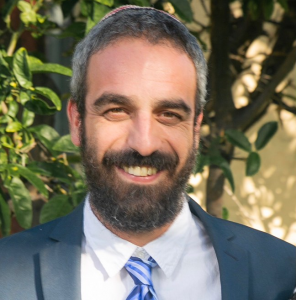 Rabbi Natan Halevy
Noah 5787, BSD
The Legacy of Deeds: From the Waters of Noah to the Light of Abraham
Shalom.
In Parashat Noah, the Torah introduces us to a giant of spirit with a profound description:
“These are the offspring of Noah, Noah was a righteous man; he was perfect in his generations; Noah walked with G-d.”
Notice something striking right at the beginning: Why does the Torah promise us the “offspring of Noah” and then immediately give us a description of Noah’s character instead of listing the names of his children?
This subtle shift teaches us a foundational truth: the true “offspring” of righteous people are their good deeds and actions. As the popular saying goes, “you’re going to reap just what you sow.” When we leave this physical realm, it is not our physical possessions or mere titles that remain—our life’s ultimate impact is measured by the actions we leave behind. A truly righteous person brings blessing not only upon themselves and their immediate families, but upon everyone close to them and, ultimately, upon the entire world.
Righteousness in the Face of Evil
Noah was entirely surrounded by evil people, yet despite the rampant corruption around him, he walked with Hashem. Living in such a wicked generation made serving Hashem an incredible uphill battle. His willingness to push himself to be good despite these overwhelmingly challenging circumstances demonstrates his immense personal greatness.
However, our sages offer a nuanced look at Noah’s righteousness. His acclaim is largely relative to the evil age in which he lived—had he lived in the generation of Abraham, his righteousness would not have stood out as extraordinary. Indeed, as noble as Noah was, his personal merit was not strong enough to protect or save the world from the Flood.
The Mystery of the Ten Generations
This brings us to a famous teaching in the Ethics of the Fathers (Pirkei Avot) regarding the flow of biblical history:
“There were ten generations from Adam to Noah. This is to teach us the extent of G‑d’s tolerance; for all these generations angered Him, until He brought upon them the waters of the Flood.
There were ten generations from Noah to Abraham. This is to teach us the extent of G‑d’s tolerance; for all these generations angered Him, until Abraham came and reaped the reward for them all.”
At first glance, this teaching is deeply perplexing:
Unpacking the Difference: Interpersonal Decency vs. Divine Reverence
To resolve these questions, we must examine the spiritual trajectory of these two eras.
1. The First Ten Generations (Adam to Noah)
From the moment of Adam’s initial sin, humanity spiraled into a progressive spiritual descent. Cain’s murder of his brother Abel set off a tragic trend that culminated in pervasive, systemic evil.
Parashat Noah records Hashem’s verdict:
“The end of all flesh has come before Me, for the earth has become full of robbery because of them, and behold I am destroying them from the earth.”
Our commentaries explain that this generation had completely lost regard for human life and acted with absolute violence toward one another. Their moral corruption polluted the very earth itself, to the point that G-d felt there was no possibility for rectification—only purification through the waters of the Flood. The “reward” for their misdeeds was the total destruction and rebirth of the world.
2. The Second Ten Generations (Noah to Abraham)
The ten generations following the Flood were the builders of the Tower of Babel. Unlike their predecessors, they possessed genuine love, harmony, and respect for one another. However, their flaw lay in their disdain, rebellion, and mistrust toward G-d.
Because their interpersonal behavior was good, G-d did not bring a destructive punishment upon them as He did with the generation of the Flood. Yet, because they lacked spiritual intention, reverence for G-d, and divine connection, they were not a fitting vessel to receive the spiritual blessings that should have resulted from their good social actions.
Abraham: The Ultimate Uplifter
This is precisely where Abraham enters the picture and changes the course of human history.
Abraham began to transform the mindset of the masses by teaching the world about Hashem’s oneness and His divine providence over creation. For this reason, the Torah crowns Abraham as the “Father of many nations.”
Because Abraham succeeded in turning so many wayward souls back to Hashem, he drew an abundant light of divine energy into the world during his lifetime. This explains why Abraham reaped the reward of the ten generations before him: he transformed the world into a proper vessel for Hashem’s light.
In a profound sense, Abraham’s actions redeemed and uplifted all the unexpressed spiritual potential of the previous generations. All the human kindness and actions that had previously lacked a connection to Hashem were now elevated, sanctified, and bound to the Almighty.
The Takeaway for Our Lives
The journey from Noah to Abraham teaches us a vital lesson for our own daily lives:
10505 Santa Monica Blvd., Los Angeles, CA 90025
310.474.0559 / webmaster@kahaljoseph.org