310.474.0559 / webmaster@kahaljoseph.org
10505 Santa Monica Blvd., Los Angeles, CA 90025
310.474.0559 / webmaster@kahaljoseph.org
10505 Santa Monica Blvd., Los Angeles, CA 90025
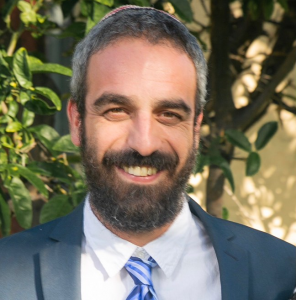 Rabbi Natan Halevy
Passover 5786, BSD
Chag Sameach!
We celebrate the holiday of our liberation.
Pesach is called “Zman Cheruteinu” — “The time of our freedom.”
It is a time when the energy and potential for growth are annually renewed. Our tradition enables us to connect to this energy in an ever-increasing manner, no matter where and when we find ourselves.
We became a full-fledged nation in Egypt. Thus, we were completely dependent on and subjugated to the Egyptians in both a physical and spiritual sense. This is why Hashem taking us out was such a special occurrence. It is likened to someone taking gold out of the furnace without any tongs.
We are given powers of spiritual liberation on Pesach and the Seder nights, especially by performing the mitzvot connected to the holiday. Our deeds and intentions constitute a true reenactment of the spiritual liberation which happened so many years ago. We relive it in an increasingly more powerful way every year.
The order of the Seder and the recitation of the Haggadah are part of the process of integrating this energy into our lives. There are 15 steps of the Seder, which correspond to the first two letters of Hashem’s name, yud and heh.
Pesach means “skipping” in Hebrew. Although we are going in order, we are able to go out of the limitations that may be “enslaving” us on a spiritual level.
The word “Haggadah,” which means “telling,” comes from the biblical commandment: “And you shall tell your son (children) on that day.” It is a mitzvah to tell and teach our children on this night.
Getting our children, and the younger generation, involved and engaged is one of the main highlights of Pesach. That is why the four questions are asked by children at the start of the Haggadah. And this is the reason behind so many other customs which were instituted to keep children engaged.
In order to ensure a strong future for our nation—and ultimately, the entire world—we must enlighten and inform our children constantly. On Pesach, the importance of this valuable service is emphasized emphatically.
Pesach is one of the main foundations of our connection to Hashem. It is then when He truly made us a nation, as this was the preparation for receiving the Torah on Mount Sinai. We count the days of the Omer in preparation for the reception of the Torah that occurs every year in a more powerful way as well. By experiencing these spiritual energies during these times, we truly affect powerful blessings for health and prosperity in our lives.
Pesach is also known as the Holiday of Matzot. Matzah is called the “food of faith.” It strengthens our faith in Hashem. In a world filled with illusions, this faith is a bedrock of strength for us.
The Talmud states that a baby begins talking when they taste grain—there is an aspect of wisdom gained through wheat. In a similar manner, we experience spiritual growth through eating this spiritual food, Matzah.
Matzah is also called the “food of healing.” When we have faith, we are healed retroactively, as stated by Moshe Rabbeinu.
Pesach is also the Holiday of Spring—a time of regrowth and rebirth. Pesach is the renewal of the energy of miracles. For this reason, it is known as the Rosh Hashanah for miracles.
When we start to view life through this “miraculous” lens, we attune ourselves to this incredible, miraculous energy, and we begin to see a noticeable change in our lives.
Pesach is the time of our liberation. We are obligated to be aware and immersed in the liberation which is available to be experienced on Pesach.
Maimonides, in his Guide for the Perplexed, explains that there are four types of perfection that a person can strive for:
Such forms of perfection are only possible for those who are not enslaved by others. When we uplift ourselves to higher levels, we find more success in the things that are most valuable in our lives.
We recite in the Haggadah:
“This is the bread of poverty which our ancestors ate.”
As we begin the Haggadah, we emphasize the power of God. Matzah serves as a symbol of memory. When we refer to the bread of affliction, we are reminded that despite Pharaoh’s immense power—so great that no slave ever escaped from Egypt—we were able to do so with the help of God.
Matzah teaches us that we could not have escaped Egypt on our own. Others might take credit for their success, but the bread of affliction reminds us that we were powerless without Him. When we contemplate the meaning of Matzah, through which our ancestors merited God’s blessings, we affirm that the hand of God is all-powerful—the Creator of light and darkness. Matzah is not the food of slavery, but an affirmation of God’s providence—the One who creates the rich and the poor.
We conclude:
“Now we are here. Next year in the land of Israel.”
For there is no real redemption like the liberation of the mind, and there is no exile as complete as an imperfect intellect. A person is truly free when their desire for material possessions is subordinated to their intellect—and their intellect is surrendered to God.
Each person is obligated to see themselves as if their intellect has gone out from the exile of foolishness and materialism. That is why we say: Now we are here—sunken in the depths of desire associated with the body. Next year, in the land of Israel—the place our sages praise as a land of great wisdom.
Now we are slaves because our intellect is subjugated to materialism. Next year, may we be free from the exile of foolishness and ignorance. Only then will we understand the ways of the Creator, and the world will be filled with the knowledge of God as the waters fill the sea. We will no longer need miracles like the splitting of the Red Sea to recognize His greatness.
May Hashem bless us all with health and good tidings.
Chag Kasher Vesameach.
10505 Santa Monica Blvd., Los Angeles, CA 90025
310.474.0559 / webmaster@kahaljoseph.org